
The Department of Law at Salahaddin University was established in 1985. Morning studies began in the 1985-1986 academic year and continue to this day. Evening studies began under the name of the College of Law in 1992 and were discontinued by ministerial decree in 2017. The college has graduated thousands of lawyers and cadres who have held numerous government and civil service positions. The Department of Law at Salahaddin University offers bachelor's, master's, and doctorate degrees in law. The Department seeks to produce highly qualified and professional lawyers who can satisfy the legal needs of the KRI and Iraqi government and business sectors in light of national goals and objectives. In addition to that, the curriculum consists of modules designed to equip students with such skills and knowledge needed to succeed as academics and leaders in the legal field.
The Department of Law at Salahadin University is proud of its professional and highly qualified teaching staff. It is keen on hiring the most knowledgeable, experienced and academically qualified professionals in the legal sector. It works to create the best learning environment for its students so that they will be well-equipped with all the necessary skills when they graduate.
The department members of Salahadin University's Department of Law are highly skilled and professional. It has a strong desire to employ the best skilled, educated, and experienced legal experts. In order for its pupils to graduate with all the skills they need, it strives to provide the greatest learning environment possible. In addition to study courses, students at the Department of Law receive a chance to act like prosecutors, lawyers and judges and, off campus, they experience a short-term work placement at the courts in the region. The department’s Moot Court Hall is specially prepared for training students and discussing and passing on judgments on hypothetical cases.
Graduates of the Law Department are trusted by employers in Kurdistan who look for energetic, committed and well-informed legal persons to work as legal experts, paralegals, lawyers or managers of the legal units at commercial, construction, media and other types of companies. Many of our graduates have found work and some have attained higher academic qualifications and now work as academics in the higher education sector.
Studying for a Bachelor's Degree in the Law Department is five years. It follows the common annual system for law schools in the Kurdistan Region of Iraq which is adopted by the Ministry of Higher Education.
Head of department
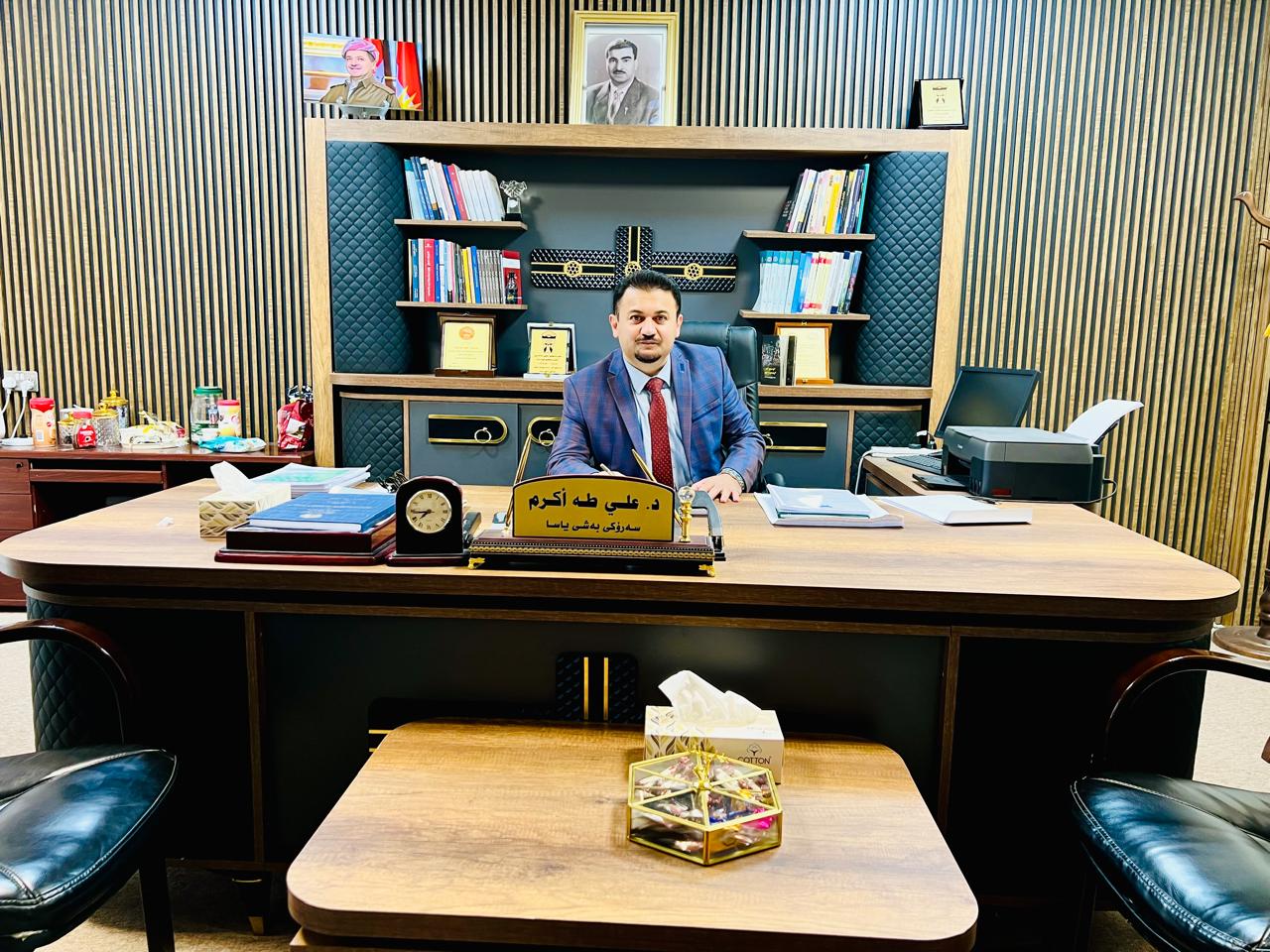
Ali Taha Akrem Kani graduated from Salahaddin University in 2007, ranked Second in the law department. He is a Lecturer at the College of Law / Salahaddin University– Erbil since 2013. He holds a Ph.D. in philosophy in International Commercial Law from Near East University in 2023. He completed his LL.M. Degree in International Business Law from Girne American University in 2013. He has 11 published articles in different journals in Iraq and abroad (Clarivate SSCI). Over the past years, Ali has gained extensive experience by participating in many committees at the college level such as examination committees and student research evaluation committees. Also at the Iraqi level, he participated in the international Jessup competition held annually in the United States among law students worldwide. Presently, he serves as the head of the law department at the College of Law - Salahaddin University.
Research Interest:
Private Law - Commercial Law - International Commercial Law - Intellectual Property Law - Personal Status Law - WTO
Publications:
1. The legislative disparity in questions concerning the implications of the marriage contract between the Personal Status Law of Iraq and the Kurdistan Region - A comparative study, Ali Taha Akrem ; Naeema Kamal Ali ; Goran Qadir Saeed, Journal of Legal and Political Studies, Volume 13 , April 2025 , Pages 339-355, Journal with DOI https://doi.org/10.17656/jlps.10296
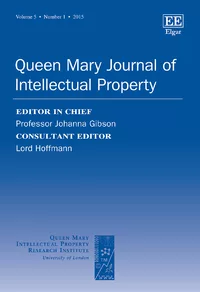
2. Reformation of the Iraqi legal system by the Coalition Provisional Authority after 2003 as an attempt towards WTO affiliation, Queen Mary Journal of Intellectual Property Law : ISSN (20459807) (20459815), Impact factor Journal(Thomson Reuters), 2023-10-12
3. The lawfulness of space mining for commercial exploitation, journal of law and politics- salahaddin university, Journal with DOI, 2023-12-01
4. هەڵوەشاندنەوەی متمانەپێدراوی قەواڵەیی لە یاسای بازرگانی عێراقیدا بەراورد بە ستانداردی ژووری بازرگانی نێودەوڵەتی UCP 600, گۆڤاری زانکۆی ڕاپەرین, Journal with DOI, 2023-12-29
5. Legal Security in Iraq: Commercial and administrative law is a model, March 2018, Qalaai Zanist Scientific Journal, DOI: 10.25212/lfu.qzj.3.3.01, Legal Security in Iraq: Commercial and administrative law is a model | QALAAI ZANIST SCIENTIFIC JOURNAL
6. Documentary Credit as a Guarantee in International Business and The position of the Iraqi Law, January 2018, Journal of Zankoy Sulaimani Part (B - for Humanities) 53(1):423-439, DOI: 10.17656/jzsb.10589
Teaching:
Academic English Language (Grade 3)
The goal of Salahaddin University's law department is to produce competent, skilled, and well-trained professionals for Kurdistan's legal industry so they can pursue a variety of legal careers and hold significant legal positions in the public and private sectors. Developing our staff's research and teaching skills and providing the opportunity they need to grow are also our responsibilities. We put a lot of effort into educating people about the law and the significance of abiding by it.
VisionThe Department of Law will be fundamental to raising the calibre of the highly specialised legal culture of Salahaddin University's legal studies graduates. To produce highly qualified law graduates who can be engaged in their professions and meet the demands of the labour market as soon as they graduate, twinning and interaction between the theoretical and applied components of our studies will also be made.
International law, private law, international organisation law, administrative law, and Islamic Sharia are among the many laws that students study. English and Arabic are also taught to them as legal languages. A generation of highly qualified legal professionals with a strong legal culture is what the Department of Law seeks to prepare. Along with practicing law in a variety of public service capacities, it also seeks to promote research in areas of the legal sciences that have an impact on society and the state in the legislative, executive, and judicial branches. In order to achieve justice and expose the truth, the Department offers specialised legal consultations, including interpreting laws, offering legal opinions on court decisions and rulings, and supplying interested parties with information and legal assistance. Additionally, it encourages students to write and publish scholarly research in all areas of legal specialisation.
The Deanship of the College of Law at Salahaddin University has executed a memorandum of understanding with the Kurdistan Centre for International Law (KCIL) on October 7, 2024. This initiative is part of the College of Law's efforts to enhance its affiliations with governmental and non-governmental organizations, both within and beyond the Kurdistan Region of Iraq, thereby fostering an environment conducive to the education of its law students. Simultaneously, the organization has undertaken several legal and scientific initiatives and established courses for students at the College of Law in Salahaddin University.
Degree Program Overview
The Department of Law offers comprehensive undergraduate programs designed to provide students with a solid foundation in legal theory, critical thinking, and practical skills. These programs prepare students for a wide range of legal careers by combining rigorous academic study with experiential learning opportunities such as moot courts, internships, and legal clinics. Upon graduation, students are well-equipped to pursue advanced legal studies (LL.M., Ph.D.) or enter professional roles in legal practice, the judiciary, public administration, international organizations, corporate law, or legal research.
Law study Program
The undergraduate law program provides in-depth knowledge of the fundamental principles of legal studies, with a strong focus on constitutional law, civil and criminal law, international law, administrative law, human rights, legal theory, and jurisprudence. Students explore a wide range of legal disciplines while developing critical thinking, analytical reasoning, and legal research skills. The curriculum emphasizes the integration of theory and practice through moot court exercises, legal clinics, case studies, and internships. This program equips students with the essential skills needed to pursue diverse career opportunities in legal practice, public service, judiciary, corporate law, international organizations, and legal research.
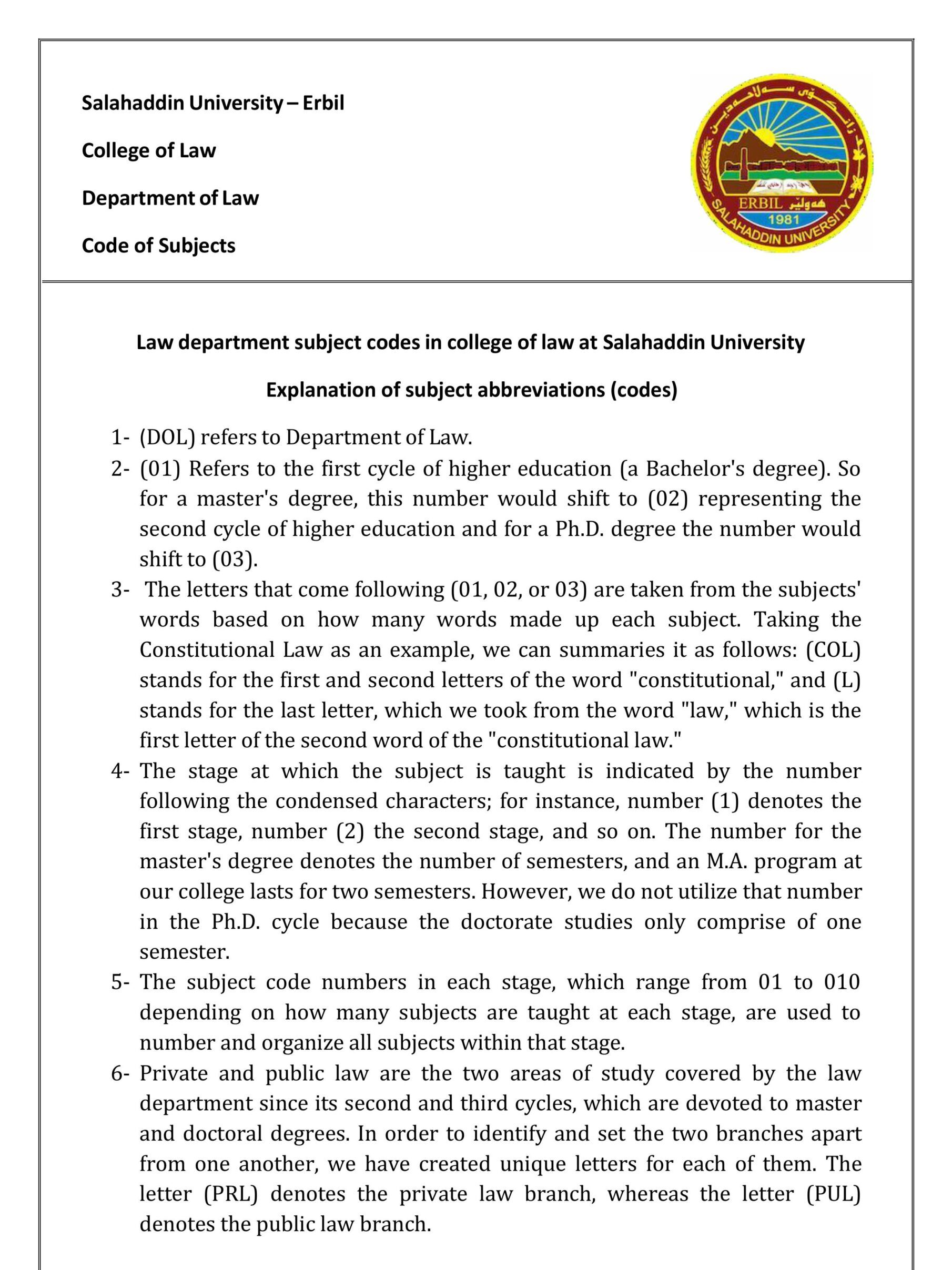
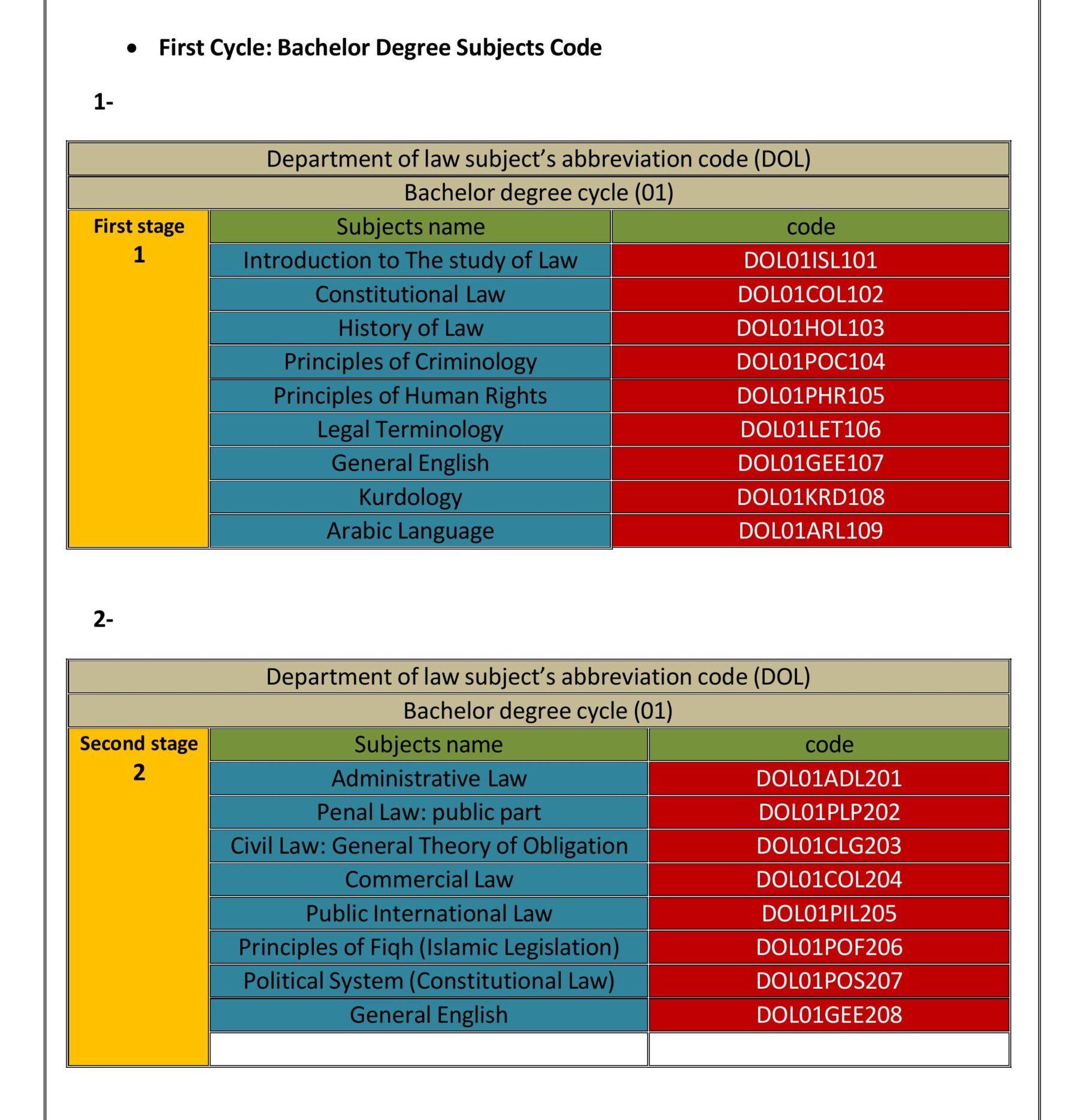
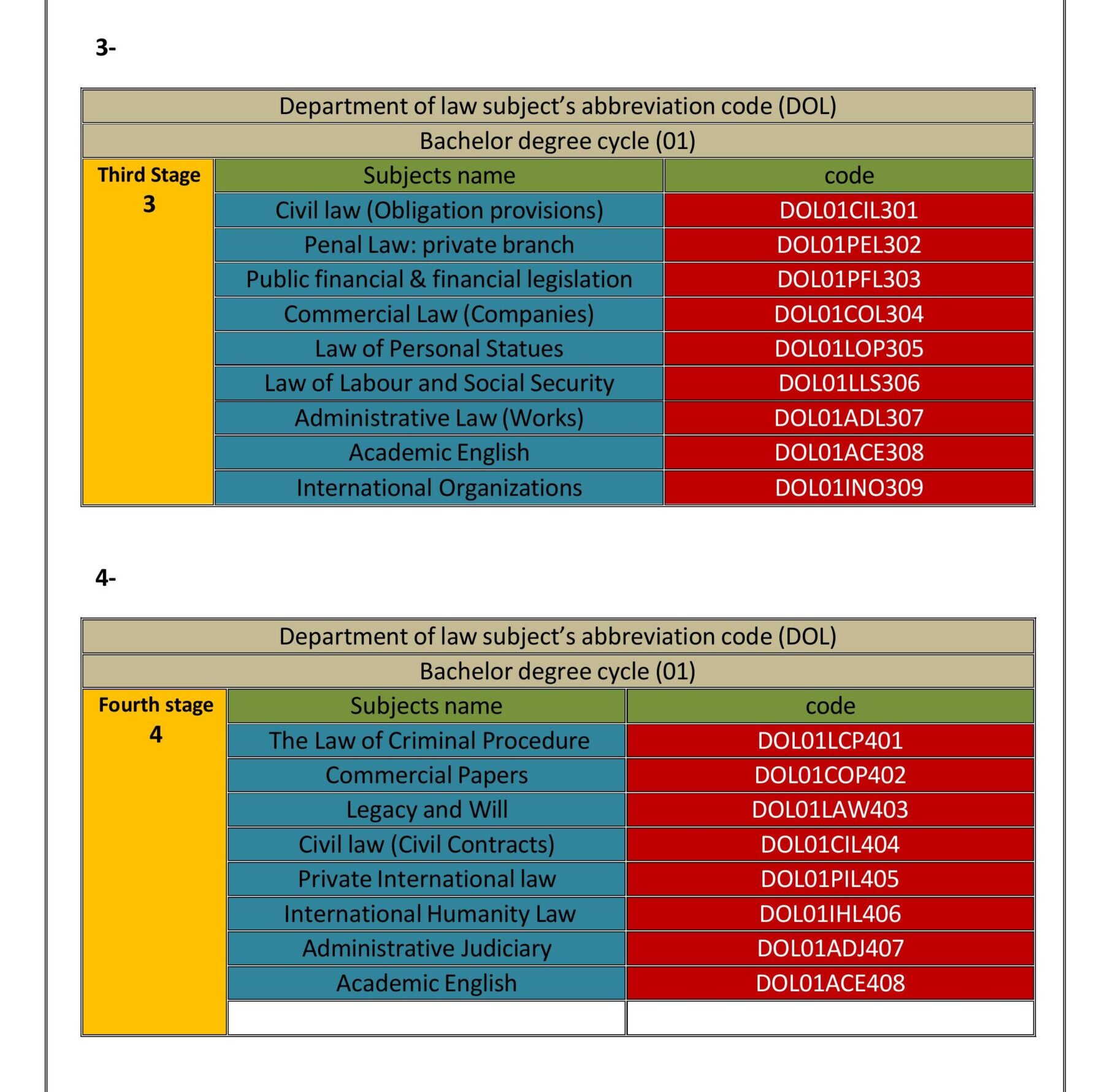
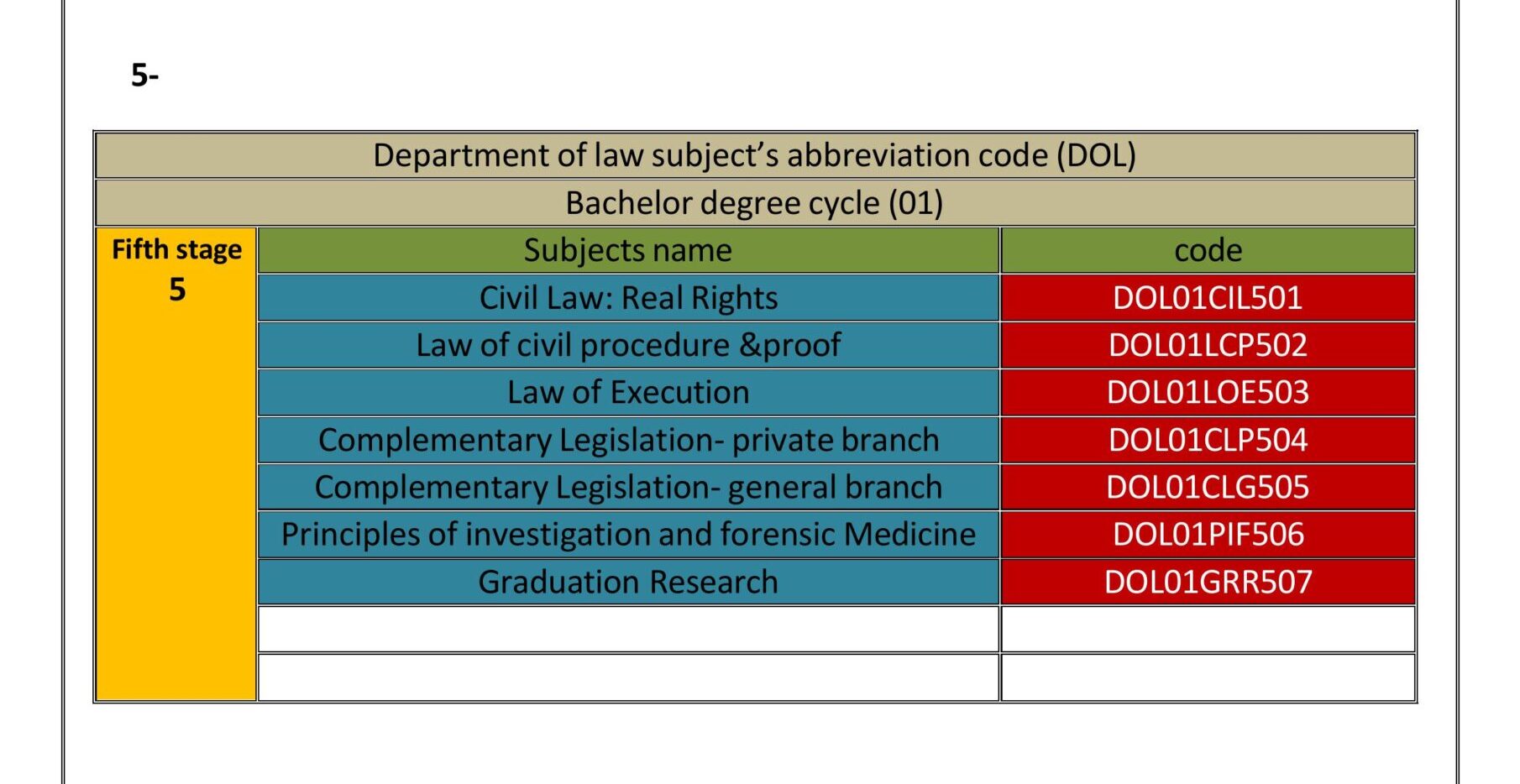
Key features of law program include:- Core Courses in Civil Law, Institutional law, Criminal law, Administrative law, and Civil Procedures law, Penal law, Civil Contracts, Private international law, Execution Law.
- Elective courses allow students to specialize in specific areas of interest, such as Supplementary Legislation General Section and Complementary Legislation private Section.
- Research Project Students will have Legal Research Project in the final year to develop advanced legal research, critical analysis, and argumentation skills.
Program Structure
The Bachelor of Laws (LL.B.) is a five-year, full-time undergraduate program structured in accordance with the European Credit Transfer and Accumulation System (ECTS). On Each academic year students completing 60 ECTS credits.
- Years 1 and 2 and 3 focus on foundational courses in core areas of law, including constitutional law, legal theory, criminal law, and civil law, along with essential academic and professional skills such as legal writing, critical thinking, and computer literacy.
- Years 4 and 5 include advanced and specialized legal subjects, elective courses, practical training components such as moot court and internships, and a final-year legal research project designed to deepen analytical and research capabilities.
Career Readiness and Development
The law programs place a strong emphasis on ethical legal practice, critical thinking, research skills, and practical legal experience. Students benefit from:- Moot court sessions and legal clinics that simulate real courtroom experiences.
- Internship opportunities with courts, law firms, government bodies, and NGOs to gain real-world legal experience.
- Academic advising and dedicated career services to support career planning, professional development, and further legal education.
Postgraduate Studies
The Department of Law at Salahaddin University-Erbil offers robust postgraduate programs to advance knowledge, foster research innovation, and develop specialized expertise in Law
Program Offerings
- Master of Art (M.A) in Law
- International Law
- Constitution Law
- Criminal Law
- Administrative Law
- Civil Law
- Commercial Law
- International Private Law
- Other Specialised Subfields
- Coursework (60 ECTS): Advanced topics in Law tailored to the student's area of specialization.
- Research Thesis (60 ECTS): An independent research project culminating in a thesis defense.
- Demonstrate advanced knowledge in their chosen field of Law.
- Design, conduct, and analyze legal research using appropriate methodologies.
- Communicate scientific findings effectively in written and oral formats.
- Apply critical thinking to address legal problems.
- Work independently and collaboratively in research settings.
- Doctor of Philosophy (Ph.D.) in Law
- Advanced Coursework (30 ECTS): Topics tailored to support the research project.
- Research and Dissertation (150 ECTS): Original research culminating in a dissertation and defense.
- Conduct independent, original research that contributes to the body of knowledge in Law.
- Demonstrate expertise in a specialized area of Law.
- Publish research findings in peer-reviewed journals.
- Exhibit advanced problem-solving and critical-thinking skills.
- Lead research projects and mentor junior researchers.
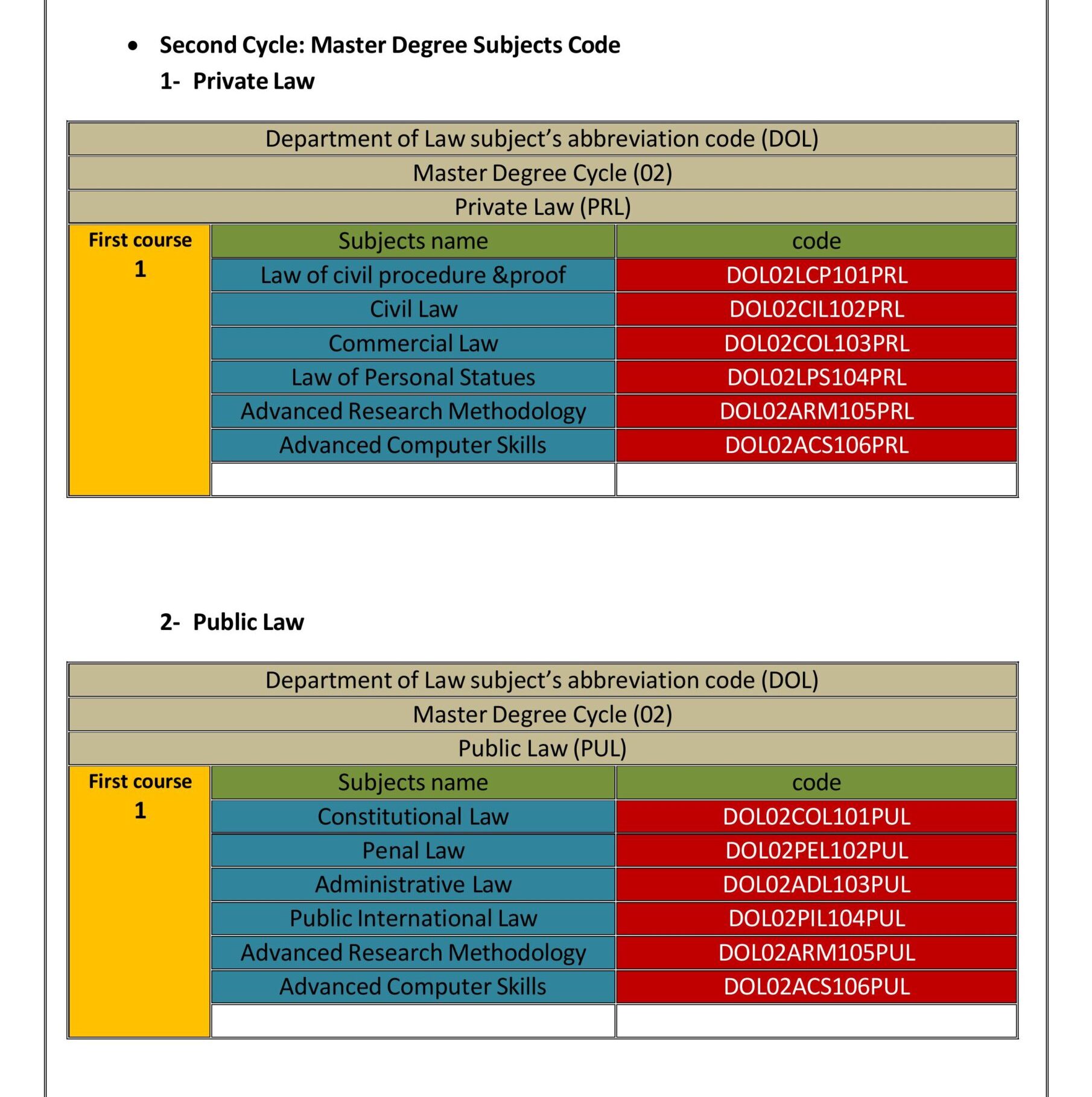
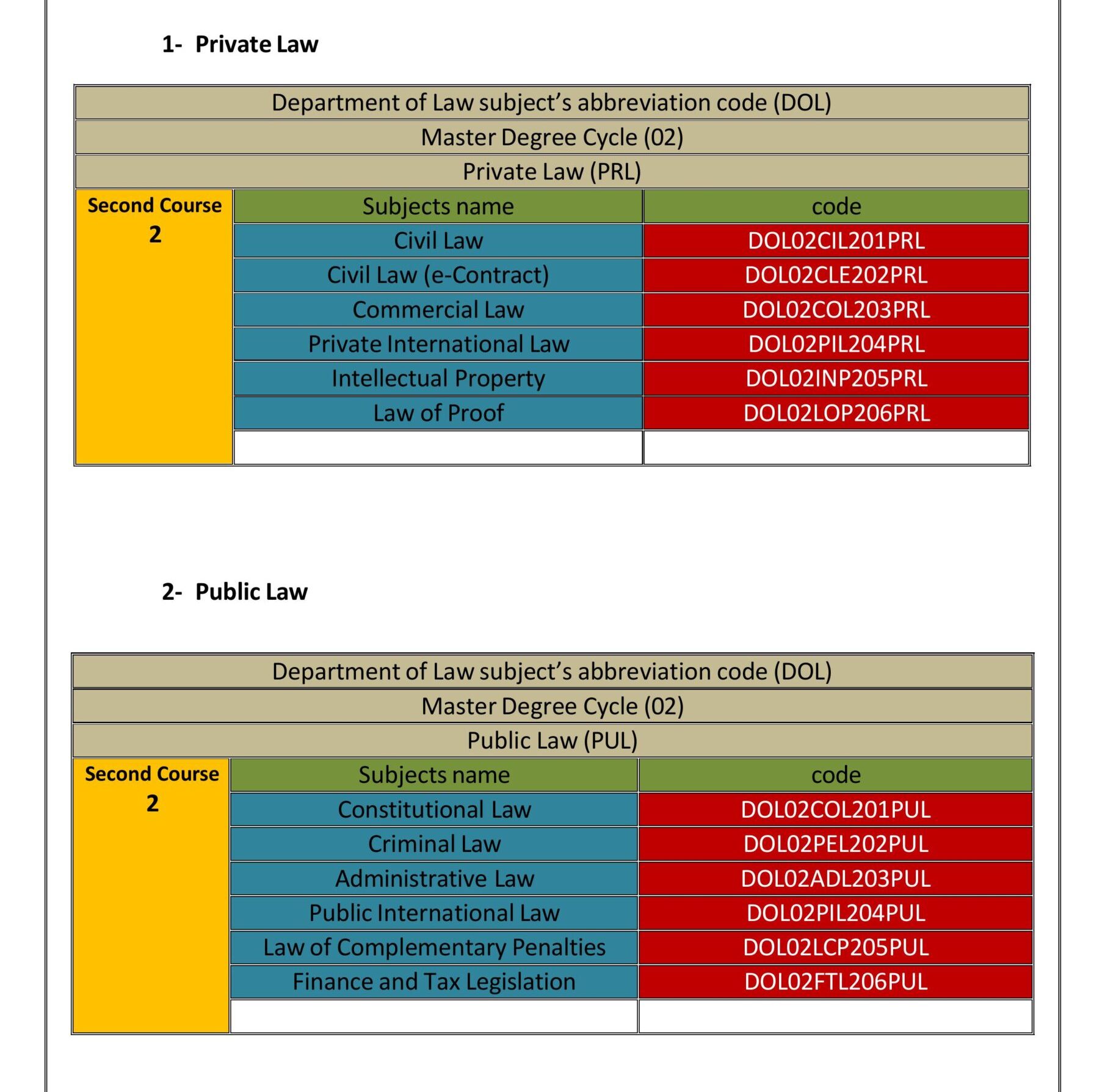
The M.A program is designed to provide students with advanced theoretical knowledge and practical research skills in various legal disciplines. The program emphasizes coursework and research to prepare students for academic, legal practice or governmental careers in Law field.
Focus Areas:ECTS Distribution:
The program is structured to include 120 ECTS over two academic years:
Learning Outcomes:
Graduates of the M.A. program will:
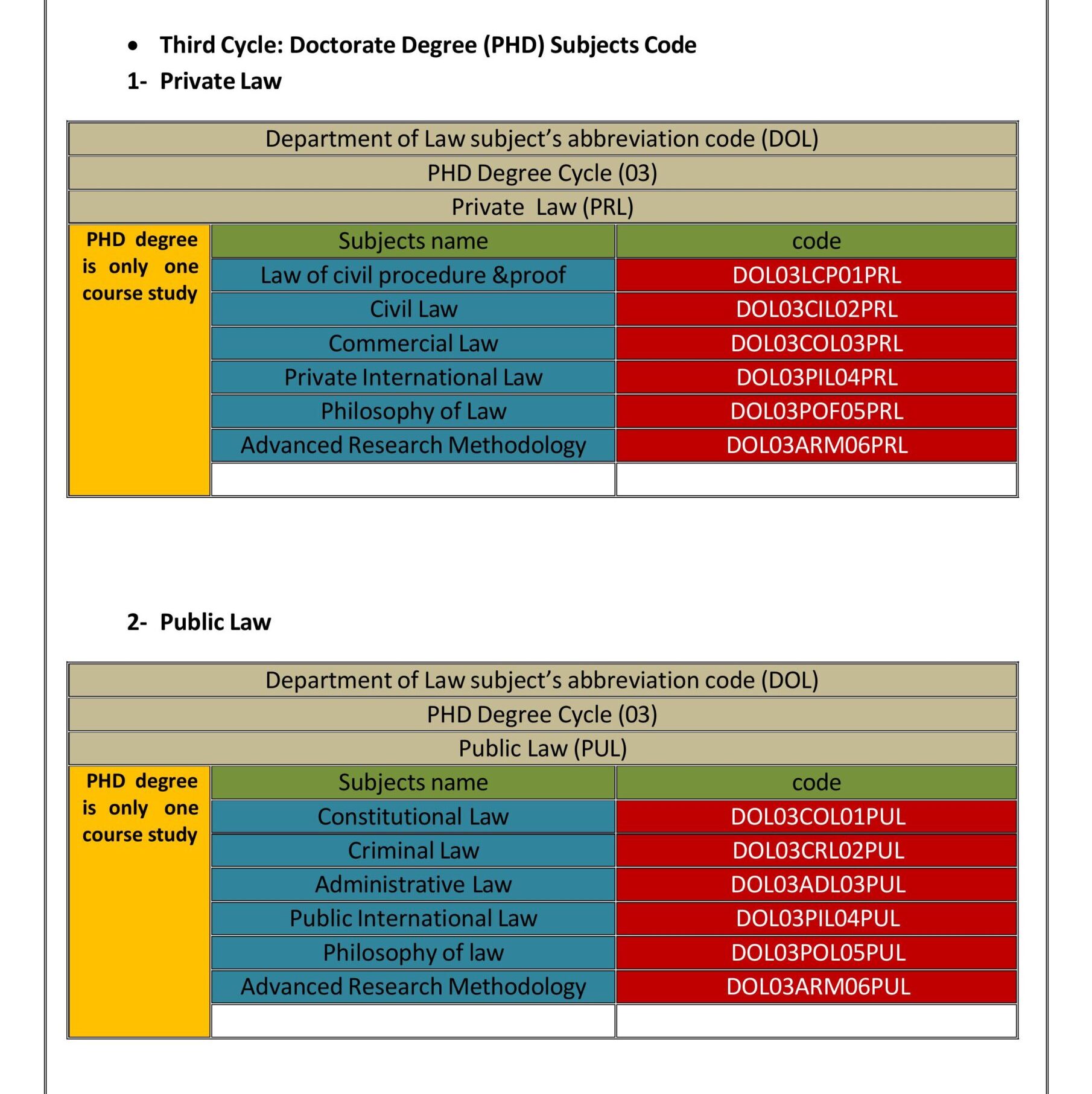
The Ph.D. program focuses on original research contributions to the field of Law, aiming to develop experts capable of advancing legal knowledge through innovative and impactful research.
Specialization Areas:Students work closely with faculty mentors to focus on a specific research area within Law, such as Public Law, or Private Law.
ECTS Distribution:The Ph.D. program requires 180 ECTS, typically completed over three to four years:
Graduates of the Ph.D. program will:
M.A. Program
- Bachelor’s degree in Law with 60 marks or more.
- Minimum academic performance by university regulations.
- Proficiency in English (demonstrated through tests like IELTS or TOEFL or successful completion of English language courses in governmental Universities in Kurdistan).
- Successful performance in the scientific competition exam and interview.
- Master’s degree in Law with 70 marks or more.
- Proven research experience, preferably with publications in scientific journals.
- Submission of a detailed research proposal aligned with the department’s expertise.
- Proficiency in English (demonstrated through tests like IELTS or TOEFL or successful completion of English language courses in governmental Universities in Kurdistan).
- Successful performance in the scientific competition exam and interview..
The department has modern research tools, and computational resources to support postgraduate students’ academic journeys. Collaborative opportunities with national and international institutions are also available, encouraging interdisciplinary research and innovation.
The postgraduate programs are designed to empower students to become leaders in their respective fields, whether in academia, legal practice, or public service and contribute meaningfully to advancing Law field.
Program learning outcome
Graduates from the Department of Law at Salahaddin University-Erbil will achieve the following learning outcomes upon successful completion of the undergraduate law program:
- Comprehensive Legal Knowledge Demonstrate a broad and in-depth understanding of fundamental legal concepts, principles, and systems, including constitutional law, civil and criminal law, international law, administrative law, and legal theory. Graduates will be able to interpret laws, analyze legal texts, and understand the structure and functioning of national and international legal institutions.
- Critical Thinking and Legal Reasoning Apply logical reasoning and critical analysis to assess legal issues, construct arguments, and solve complex legal problems. Graduates will be able to evaluate case law, statutes, and legal precedents to form well-supported legal opinions.
- Legal Research and Analytical Skills Demonstrate proficiency in legal research methods, including the use of legal databases, case analysis, and statutory interpretation. Graduates will be able to formulate legal questions, conduct systematic research, and present their findings clearly and coherently.
- Ethical and Professional Conduct Uphold high ethical standards and professional integrity in legal practice. Graduates will be familiar with legal ethics, responsibilities of legal professionals, and the importance of justice, fairness, and the rule of law in both public and private sectors.
- Effective Legal Communication Effectively communicate legal arguments, findings, and analyses to a variety of audiences through structured legal writing, oral presentations, and advocacy. This includes drafting legal documents, writing case briefs, and participating in moot court activities.
- Career Readiness Be prepared to pursue careers in law firms, courts, public institutions, private companies, international organizations, and non-governmental organizations. Graduates will have the legal knowledge and practical skills necessary for roles in litigation, legal advising, policy-making, and public service.
- Lifelong Learning and Professional Development Commit to continuous learning and professional growth. Graduates will be adaptable to legal developments, reforms, and emerging fields such as legal technology and international human rights law, ensuring ongoing competency in their careers.
- Legal Advocacy and Social Responsibility Demonstrate a commitment to justice, equality, and public interest by engaging in community service, legal aid, and advocacy. Graduates will be equipped to use their legal training to contribute positively to society and uphold democratic values.
By achieving these outcomes, graduates from the Department of Law will be well-prepared to contribute meaningfully to the legal profession, support the development of the justice system, and serve their communities with integrity and expertise.
Admissions
The Department of Law offers two types of study options for prospective students, ensuring easy access and flexibility based on individual circumstances:
- Zankoline Study (Government Funded)
- Description: This option provides free study for students who meet the eligibility criteria and are admitted through the General Central Admissions System, known as "Zankoline."
- Eligibility:
- Applicants must meet the academic requirements of the Ministry of Higher Education and Scientific Research.
- Selection is competitive and based on secondary school grades, whether in science or literature.
- Benefits:
- Free tuition fees
- Access to full university services and facilities.
- Parallel Study (Self-Funded)
- Description: This option allows students who are not offered a place at Zankoline to continue their studies by paying tuition fees during their academic years.
- Tuition Fee: IQD 2,000,000 Iraqi dinars per year.
- Eligibility:
- Students must meet the minimum academic requirements for admission to the law program.
- This option provides additional opportunities for students to complete Zankoline requirements.
- Benefits:
- Receive the same high-quality education, resources, and facilities available to Zankoline students.
- Students can achieve their academic goals without being restricted by central admissions quotas.
Admission Requirements for Both Tracks
- Academic Qualifications:
- Completion of middle school, with a focus on the science track (Kurdish, Arabic, and English), For the literature track (Kurdish, Arabic, English, and History).
- A minimum cumulative GPA determined by the college's admissions plan and student application requirements for this department.
- Application Process:
- Apply through Zankoline's central admissions system.
- Submit required documents, including transcripts, proof of identity, and certificates.
- Language Proficiency:
- Proficiency in Kurdish , Arabic and basic proficiency in English , as many courses are offered in Kurdish, Arabic, and English.
Alumni
The Alumni Association of the College of Law at Salahaddin University-Erbil aims to establish an active network of graduates across the Kurdistan Region and beyond, through organizing activities and events that seek to strengthen professional and academic ties among alumni, and support them in the fields of legal and academic work, thereby contributing to the development of the legal community in the region.
Graduate Employability
College of Law is committed to equipping graduates at all levels, “Bachelor’s, Master’s, and Doctorate,” with the knowledge, skills, and experiences necessary to thrive in diverse career paths. Our graduates are well-prepared for opportunities in academia, legal practice, government, and beyond, with a focus on contributing to scientific advancement and societal development.
- Bachelor of Art (B.A.) in Law
- Lawyer (Private Practice and Legal Consultancy): The demand for qualified lawyers in Iraq is steadily increasing, especially in urban and commercial centers. Law graduates with strong communication skills and knowledge of commercial, civil, or international law are well-positioned to serve individuals, businesses, and NGOs. Private law firms and legal consultancies continue to expand, offering diverse employment opportunities.
- Legal Investigator: Legal investigators play a crucial role in supporting law firms, prosecutors, and government agencies in case preparation. Law graduates with strong analytical and research skills are highly valued for their ability to gather evidence, conduct interviews, and analyze legal information. As legal institutions in Iraq continue to modernize, the role of investigators is gaining professional recognition.
- Prosecutor: Public prosecutors are vital to the justice system in Iraq, representing the state in criminal proceedings and ensuring accountability under the law. Law graduates who pursue this path contribute to maintaining public order and upholding legal standards. The role offers stability, prestige, and a structured career ladder within the legal and judicial framework.
- Judge: Becoming a judge is one of the most respected and influential career paths available to law graduates in Iraq. Judicial training institutes provide specialized programs to prepare candidates for this role, emphasizing ethics, legal interpretation, and fairness. Judges are central to reinforcing the rule of law and ensuring justice across all levels of the court system.
- Notary Public: A notary public is a licensed legal professional responsible for authenticating documents, witnessing signatures, and managing legal transactions. Law graduates can apply for this role, especially as demand grows in areas like real estate, business registration, and personal affairs. It is a stable and respected position with growing relevance in both urban and rural settings.
- Human Rights and Public Interest Lawyer: In post-conflict regions and areas undergoing social reform, there is increasing demand for legal professionals working in human rights, transitional justice, and legal aid. Graduates who are passionate about justice can work with NGOs, local initiatives, or international organizations active in Iraq. This career allows for meaningful engagement with vulnerable communities and legal advocacy.
- Legal Consultant for International Organizations: International agencies operating in Iraq, such as the UN, IOM, and others, often hire local legal consultants to advise on national laws, policy reforms, and justice initiatives. Law graduates with strong legal knowledge and communication skills are competitive for these roles. This career combines domestic expertise with international exposure.
- Academia and Legal Education: Graduates who pursue advanced degrees in law (LL.M. or PhD) can enter academia as lecturers, researchers, or curriculum developers. With growing demand for legal education and reform in law faculties across Iraq, academic careers are increasingly viable. This path allows graduates to shape the future of legal education and contribute to national legal development
- Ability to find, interpret, and apply legal information accurately.
- Identifying legal issues and offering effective solutions.
- Analytical and problem-solving abilities for addressing legal challenges.
- Acting honestly and professionally in all legal matters.
- Effective communication for scientific and public engagement.
- Master of Art (M.A) in Law
- Research Institutions: Conducting applied or fundamental research in Law.
- Higher Education: Teaching at universities or supervising undergraduate research.
- Science Communication: Working in scientific publishing, journalism, or outreach programs.
- Advanced problem-solving and critical-thinking skills.
- Proficiency in designing, conducting, and analyzing research.
- Ability to lead projects and collaborate across disciplines.
- Doctor of Philosophy (Ph.D.) in Law
- Academia: University professorships and lectureships, Supervision of doctoral and postgraduate research, Legal curriculum design and academic leadership.
- Legal Research & Think Tanks: Conducting high-level legal research in universities, independent institutes, or policy think tanks, Producing policy briefs, white papers, and scholarly publications influencing legislative reform.
- Industry Leadership: Senior legal advisor or consultant in multinational corporations or law firms, In-house counsel roles involving strategic legal planning and risk management.
- Government and Policy: Roles in ministries of justice, legislative bodies, or regulatory agencies, Legal policy development, legislative drafting, and judicial reform initiatives.
- International & Intergovernmental Organizations: Legal advisor or researcher at institutions such as the United Nations, WHO, UNESCO, ICC, or the World Bank, Shaping international legal standards and contributing to human rights, trade, environmental, or humanitarian law initiatives.
- Judiciary & Legal Practice: Advancement into senior judiciary roles (subject to jurisdictional requirements), Specialized legal practice informed by deep academic grounding.
- Entrepreneurship & Legal Innovation: Founding legal tech startups, boutique legal consultancies, or academic publishing platforms, Innovating in legal education, access to justice, or dispute resolution mechanisms.
- Advocacy & Civil Society: Leadership in NGOs, advocacy organizations, and human rights groups. Legal strategy, public interest litigation, and legal empowerment initiatives.
- Mastery of specialized research techniques and methodologies.
- Ability to publish high-impact scientific findings.
- Leadership in interdisciplinary and collaborative projects.
- Strategic thinking for problem-solving at organizational and societal levels.
Graduates of the B.A. program possess foundational knowledge and practical skills that open doors to a variety of career opportunities:
Career Paths:M.A. graduates are highly sought after for specialized roles requiring advanced expertise and research experience:
Career Paths:Ph.D. graduates in Law are distinguished by their deep expertise, advanced analytical skills, and capacity for original, high-impact research. They are equipped to shape the legal landscape through academic, professional, and policy-driven roles across diverse sectors.
Career Paths:Publications
Research projects



Academic Advising
The Department of Law at the College of Law, Salahaddin University-Erbil, is committed to supporting students throughout their academic journey by providing comprehensive and continuous academic advising. These services aim to ensure that students receive the guidance necessary to succeed academically and prepare for their professional legal careers.
Academic Advising Services
- Personalized Academic Support: Each student is assigned a dedicated academic advisor who provides tailored guidance based on the student's academic performance, interests in legal fields, and future career goals. Advisors assist with planning the student’s academic path and resolving any academic difficulties.
- Career Guidance and Legal Training Preparation: Advisors offer career counseling related to legal professions, postgraduate study options, and internships. Special focus is given during the final year to guide students through their practical legal training, including court practice, legal clinics, and moot court activities.
- Monitoring Academic Progress: Advisors regularly review students’ academic performance and intervene early when academic difficulties are detected. Students are directed toward available resources such as legal writing workshops, research skills sessions, and tutoring.
- Workshops and Seminars:The department organizes workshops aimed at enhancing students’ academic and practical legal skills, such as legal research methods, courtroom procedures, and time management. Seminars may also include guest speakers from the legal profession—judges, lawyers, and legal scholars—to provide real-world insights into the practice of law.
- Peer and Alumni Mentorship: Senior students and law alumni are encouraged to mentor junior students by sharing their academic experiences, internship advice, and professional insights to support academic development and future career choices.
Internship Opportunities
The Department of Law at the College of Law, Salahaddin University-Erbil, encourages students’ professional growth and practical legal experience by offering diverse internship opportunities. These internships provide students with valuable exposure to real-world legal settings, bridging the gap between academic study and legal practice.
Benefits of Internships
- Development of Practical Legal Skills: Internships enable students to apply theoretical knowledge in practical environments, enhancing their skills in legal research, case analysis, drafting legal documents, and courtroom procedures.
- Career Exploration: Through internships, students gain insight into various legal professions and practice areas, helping them make informed decisions about their future career paths.
- Professional Networking: Internships facilitate connections with practicing lawyers, judges, legal scholars, and other professionals, which can support career advancement.
- Improved Employability: Practical experience gained during internships strengthens graduates’ resumes, demonstrating their readiness for professional roles in the legal sector.
- Academic Credit: In some cases, internship participation can count towards academic credit, enriching the overall educational experience.
- Law Firms and Legal Practice: Students can intern at private law firms, gaining hands-on experience in client representation, case management, legal drafting, and negotiations.
- Judicial Internships: Opportunities in courts allow students to observe judicial proceedings, assist judges with research, and understand courtroom protocols.
- Government Legal Departments: Internships in ministries, public prosecution offices, and legal advisory departments provide exposure to public law, regulatory affairs, and policy development.
- Non-Governmental Organizations (NGOs): Students may engage with NGOs working on human rights, environmental law, and social justice, assisting in advocacy, legal aid, and research projects.
- Corporate Legal Departments: Internships with companies’ legal teams focus on corporate governance, contract law, compliance, and dispute resolution.
- Legal Clinics and Community Services: Students participate in legal aid clinics providing services to underserved communities, enhancing practical skills and social responsibility.
Career Services – Department of Law
The Department of Law at college of law in Salahaddin University-Erbil is dedicated to providing comprehensive career services to assist students in their professional development. These services are designed to support students in pursuing their career objectives, whether they aim to enter legal practice, undertake postgraduate studies, work in government or NGOs or international organizations, or explore alternative or entrepreneurial legal careers. Career services equip students with the skills, resources, and insights necessary to navigate the legal job market effectively.
Key Career Services Offered
- Career counseling and advice: Students receive personalized career counseling sessions to help them identify their strengths, interests, and potential career paths in areas such as litigation, corporate law, public service, domestic law and international law, legal research, and policy-making. Advisors also provide guidance on postgraduate study options (e.g. LL.M., judicial training), career planning, and job search strategies within the legal profession.
- Workshops and Seminars: The law department hosts workshops and seminars on a variety of topics, including interview preparation for legal roles, networking strategies, legal resume and cover letter writing, Procedures for contacting the bar association, and emerging legal market trends. These sessions help students gain confidence and develop practical skills for entering the legal workforce.
- Job Placement Assistance: The law department partners with courts, law firms, public and private legal offices, NGOs, and international organizations to connect students with potential employers. Placement support includes sharing job and internship postings, facilitating clerkship opportunities, and organizing recruitment events.
- Career Fairs and Networking Events: Annual career fairs offer students the chance to meet potential employers, learn about different legal career paths, and explore employment opportunities. Networking events with alumni, practicing lawyers, judges, and faculty members enable students to build valuable professional connections.
- Graduate College Guidance: Support is available for students planning to pursue advanced legal studies (LL.M., M.Phil., or Ph.D.) in law or related disciplines. Services include assistance with research proposals, personal statements, program selection, and graduate college applications, as well as information sessions on both local and international educational opportunities.
- Entrepreneurship and Alternative Career Support: For students interested in non-traditional legal careers, career services provide resources on launching legal startups, establishing consulting practices, or working in legal tech and innovation. Collaboration with university entrepreneurship centers and local legal incubators helps students explore creative ways to apply their legal training.
Benefits of Career Services
- Enhanced Employability: Students who develop strong legal CVs, sharpen their interview skills, and engage with the legal community are better prepared to enter the job market with confidence.
- Tailored Guidance: Individualized advising ensures that each student receives support aligned with their specific career goals and aspirations.
- Legal Industry Insights: Exposure to current developments, expectations, and emerging roles in the legal field helps students stay informed and competitive.
- Confidence and Readiness: Practical training, professional development, and mentoring build the confidence needed for students to successfully transition from law college to legal practice or further studies.
Contact Us
Reach out to us for any inquiries or support.
Address
Kerkuk Road, Zanko Street, Erbil, Iraq.